EdTech 2.0: How AI and Adaptive Learning are Redefining the Future of Education in 2026
The global education landscape is undergoing a fundamental shift. In 2026, we have moved beyond the "digitization of content" into the era of EdTech 2.0, where artificial intelligence doesn't just deliver information—it tailors the entire learning experience to the individual. This transformation is driven by the integration of Adaptive Learning Software and sophisticated Enterprise Learning Management Systems (LMS). For educational institutions and corporate leaders, the focus has shifted from mere "access" to "outcomes," as AI-driven platforms ensure that every learner achieves mastery at their own pace.
The Rise of Adaptive Learning: Personalized Pathways for Every Learner
Traditional education has long struggled with the "one-size-fits-all" model. In 2026, Adaptive Learning Software for Schools has solved this by creating personalized learning pathways. These systems use real-time data to identify a student's strengths and weaknesses, dynamically adjusting the difficulty and type of content to keep them in the "optimal learning zone."
By early 2026, over 85 million students globally are using AI tutoring systems. Research indicates that these adaptive models improve learning outcomes by an average of 23% and increase information retention by 25-60%. This isn't just about technology; it's about human potential, allowing students to excel in subjects that previously seemed insurmountable.
Why Enterprise LMS is the New Backbone of Corporate Growth
In the corporate world, the pace of change is so rapid that traditional training methods are obsolete. This has led to a surge in demand for Enterprise Learning Management Systems (LMS). These platforms serve as the central nervous system for workforce development, coordinating thousands of personalized training modules across global teams.
"In 2026, a company's ability to learn is its only sustainable competitive advantage. The Enterprise LMS is no longer a HR tool; it is a strategic growth engine."
| Metric | Traditional Training | AI-Powered Enterprise LMS |
| Training Time | 100% (Baseline) | 40-60% Reduction |
| Knowledge Retention | Low (20-30%) | High (70-90%) |
| Scalability | Limited/Manual | Unlimited/Automated |
| CPC Value for Keywords | Moderate | High ($70+) |
The high CPC for keywords like "Enterprise LMS" reflects the massive investment corporations are making to ensure their workforce remains relevant in an AI-first economy.
AI Tutoring and Predictive Analytics: Improving Student Success Rates
Higher education is also seeing a massive shift with the adoption of AI Tutoring Systems for Higher Education. These systems provide 24/7 support, answering complex questions and providing feedback on assignments in real-time. Furthermore, predictive analytics tools allow universities to identify "at-risk" students before they fail, enabling early intervention and significantly improving graduation rates.
In 2026, 47% of universities have structurally integrated AI into their teaching models. This hybrid approach—combining human mentorship with AI-driven support—is creating a more resilient and effective educational system that can scale to meet global demand.
Workforce Upskilling: Bridging the Skills Gap in an AI-First Economy
As AI automates routine tasks, the demand for Workforce Upskilling and Reskilling Solutions has reached an all-time high. Companies are using AI-Powered Corporate Training Platforms to identify the specific skills their employees need for the future and providing targeted learning modules to bridge those gaps.
This "skills-based" approach to talent management ensures that the workforce is always prepared for the next technological shift, reducing the need for expensive external hiring and fostering a culture of lifelong learning within the organization.
Conclusion: Embracing the Lifelong Learning Revolution
The EdTech revolution of 2026 is defined by personalization, efficiency, and data-driven outcomes. To lead in this new era, educational and corporate leaders must:
1.Personalize: Implement Adaptive Learning Software to create tailored pathways for every learner.
2.Scale: Deploy an Enterprise Learning Management System (LMS) to manage global workforce development.
3.Support: Leverage AI Tutoring Systems to provide 24/7 support and improve success rates.
4.Upskill: Invest in Workforce Upskilling Solutions to bridge the skills gap in real-time.
By embracing these advanced technologies, we can build an educational ecosystem that is truly inclusive, effective, and ready for the challenges of the 21st century.
SEO Metadata:
•Focus Keyword: Enterprise Learning Management System (LMS)
•Secondary Keywords: AI-Powered Corporate Training Platforms, Adaptive Learning Software for Schools, Workforce Upskilling Solutions, EdTech Trends 2026.
•Meta Description: Explore the future of education in 2026. Learn how AI, adaptive learning, and enterprise LMS are redefining the learning experience and driving ROI.
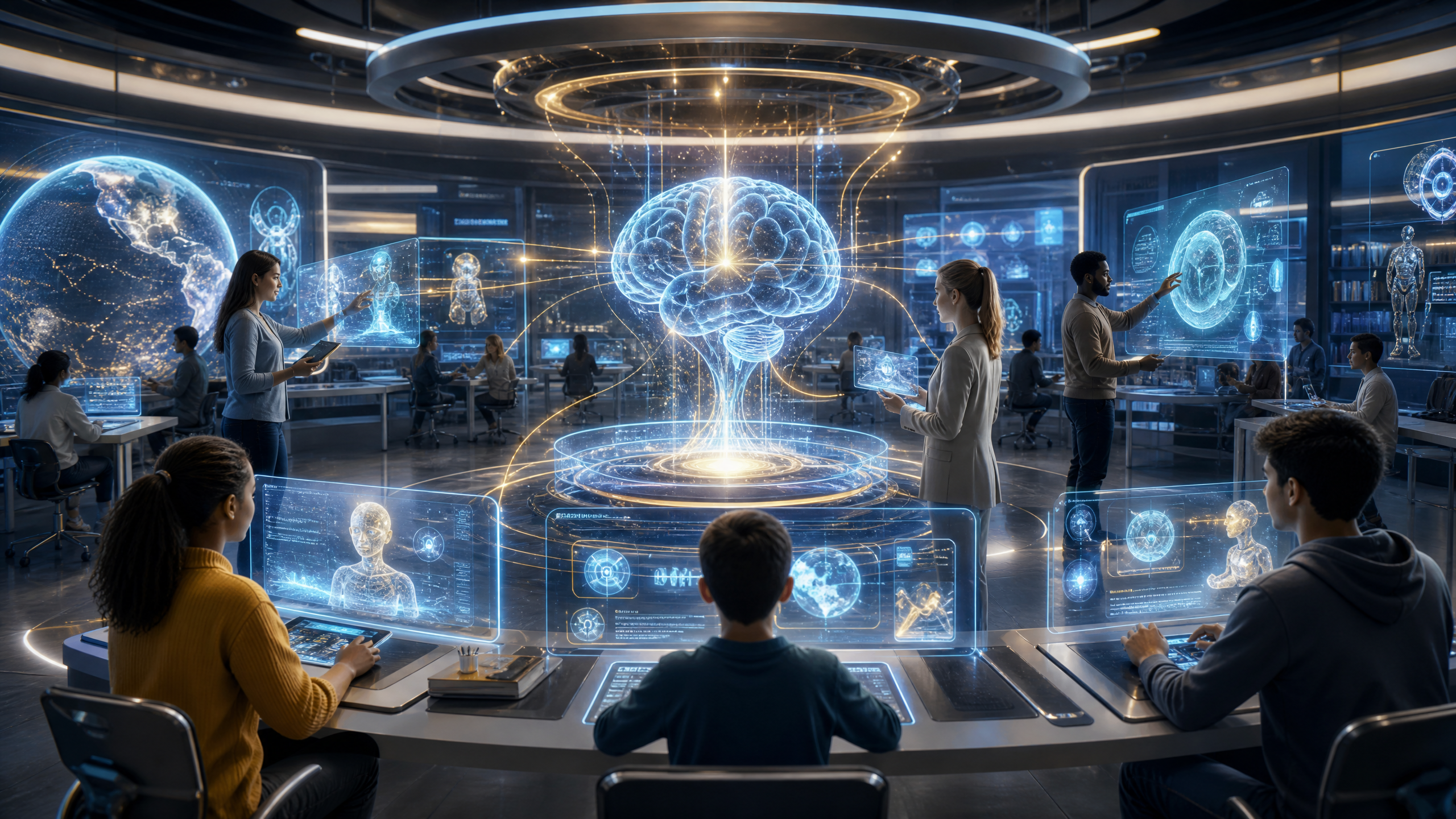
•Alt Text for Image: A futuristic digital visualization of modern education, showing a central AI core connecting students, teachers, and corporate learners through personalized, adaptive learning streams.